


Understanding cold.
Putting research in context.
What does research explore about whole-body cold? Three topics show where studies offer interesting findings—and where questions remain.
Clear questions. Answers with sources.
A concise guide to benefits, limitations and costs. The linked studies examined different procedures; they are not a blanket recommendation for a product.
What is a cryotherapy chamber?
A cryotherapy chamber is a space for brief exposure to very cold air. Whole-body cold differs from local cooling, such as an ice pack. Cabin design, cooling method and exposure conditions vary. LifeCube supplies electrically cooled chambers without liquid nitrogen for wellness and lifestyle concepts.
What does a cryotherapy chamber actually do?
A treatment benefit cannot be promised for everyone. Studies examine pain perception, sleep after exercise and physiological measurements. Findings depend on the participants, procedure and comparison group. A short-term change does not establish a lasting effect or demonstrate the effectiveness of every chamber model.
Is a cryotherapy chamber suitable for fibromyalgia?
A small study involving 23 patients reported reduced pain after a series of sessions. No clinical benefit was measurable three months after treatment stopped. This is limited evidence, not a general suitability recommendation or proof of LifeCube effectiveness. Individual suitability needs medical assessment.
Can a cryotherapy chamber help with migraine?
Findings about local cooling cannot be assumed to apply to a whole-body chamber. A randomised migraine study with 55 participants investigated a cooling neck wrap, not a chamber. That study therefore does not establish migraine treatment with LifeCube. Recurrent or new headaches need medical assessment.
Is a cryotherapy chamber suitable for eczema?
A small 2008 study with 18 adults reported improvements in some eczema and itching measures but had no control group. Three cases of mild frostbite were also reported. This does not establish a general recommendation or evidence for LifeCube. Discuss individual suitability with a dermatologist; do not independently replace prescribed treatment.
What are the disadvantages of a cryotherapy chamber?
Whole-body cold is not suitable for everyone. Potential problems include cold injuries and symptoms associated with certain pre-existing conditions. An expert consensus lists cold urticaria and several cardiovascular conditions among contraindications. These examples are not a complete screening checklist. Individual suitability, supervision and equipment-specific instructions need to be addressed before use.
How much does a three-minute cryotherapy session cost?
Each studio sets its own session price; there is no universal rate. Ask what duration, supervision, initial consultation and package conditions are included. A session fee is different from the purchase price of a chamber. LifeCube provides operators with a tailored equipment quotation based on configuration and site requirements.
Editorial team: LifeCube · AI-assisted source research, added 23 September 2026. Not a systematic review; no independent medical expert review is documented.
Three questions for research.
 AI illustration01 / PAIN PERCEPTION
Fibromyalgia
Small studies report short-term changes. How reliable and lasting are they?
Study & context
What was observed?
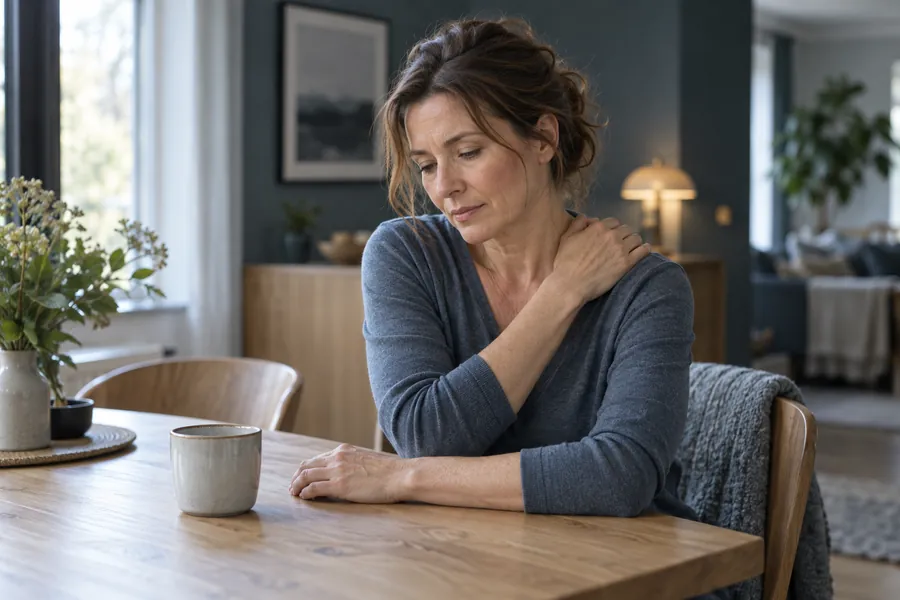
In 2021, Klemm and colleagues studied 23 people with fibromyalgia and 30 healthy comparison participants. Pain and disease burden decreased after a series of whole-body cold sessions. No clinical benefit was measurable three months after the sessions ended.
What explanation is being discussed?
Some cytokine levels also changed. The researchers discuss these signalling substances as a possible explanation. This does not prove that those changes caused the improvement in symptoms.
What are the limitations?
The small sample and comparison with healthy people rather than untreated patients limit the conclusions. The study does not establish lasting effects or successful treatment with any particular LifeCube model.
Original study: Klemm et al., 2021 ↗AI illustration02 / RECOVERYSleep quality
Findings after evening exercise—and the important distinction from sleep disorders.
Study & context
What was observed?
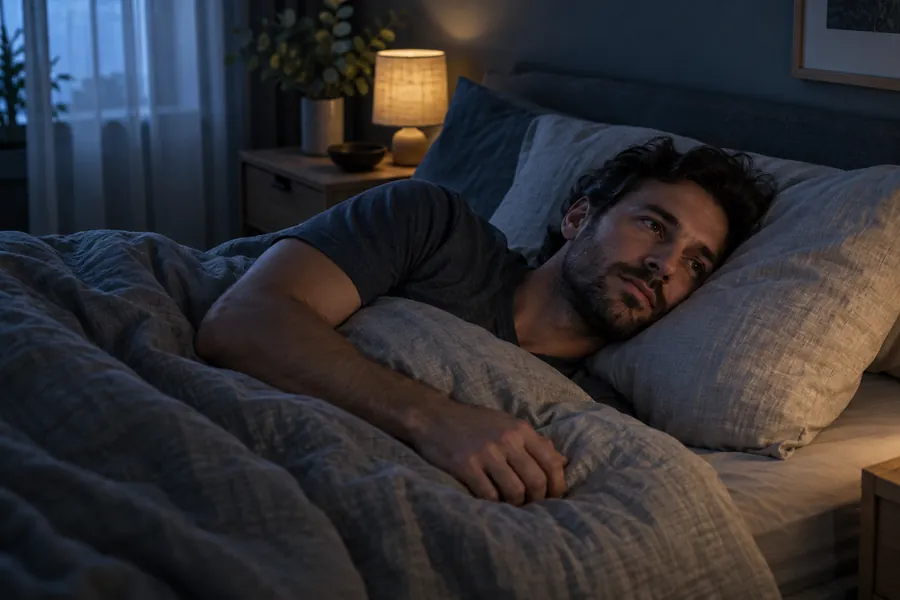
A study published in 2019 compared whole-body cold with passive recovery after evening running in 22 physically active men. The cold group reported better sleep, and fewer movements during the night were recorded.
What explanation is being discussed?
The authors suggest reduced pain and changes in parasympathetic activity as possible explanations. Heart rate variability offers clues, but does not prove a universally applicable mechanism.
What are the limitations?
The study concerned active men after exercise, not treatment for chronic insomnia. Its cold and airflow procedure cannot be equated with every cryotherapy chamber. Persistent sleep problems require their own medical assessment.
Original study: Douzi et al., 2019 ↗AI illustration03 / JOINT SYMPTOMSRheumatoid arthritis
What an additional intervention within rheumatological treatment showed.
Study & context
What was observed?
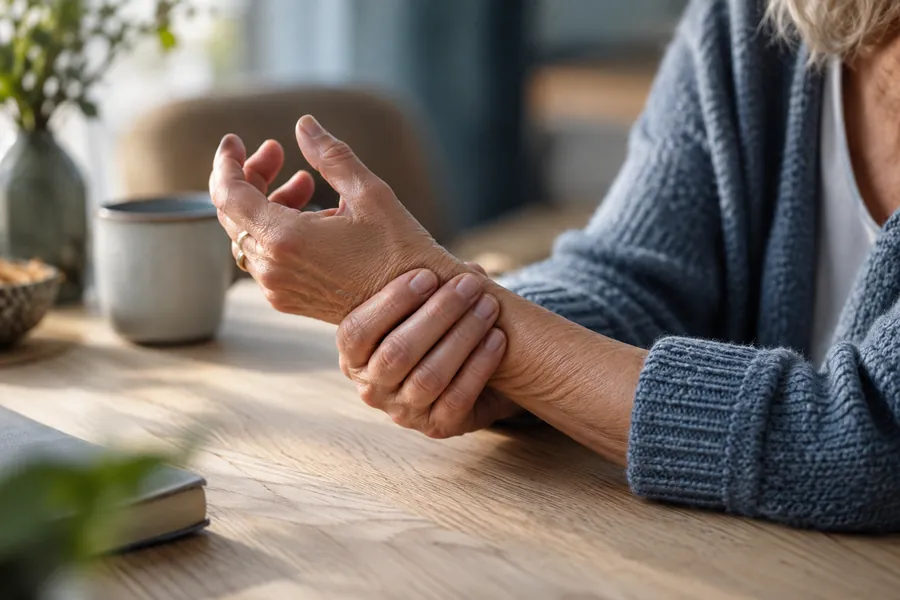
A randomised study in 2022 compared additional whole-body cold with no additional cold during multimodal rheumatological treatment. Fifty-six people completed the study. Immediately afterwards, pain reduction was greater in the cold group.
What explanation is being discussed?
Changes in the signalling substances TNF and IL-6 were discussed as a possible link. They are not an established explanation for every observed effect.
What are the limitations?
This was a small, single-centre study. Improvements in disease activity and function were no longer significant at twelve weeks. The findings do not automatically apply to all rheumatic diseases or LifeCube products, and do not replace necessary treatment.
Original study: Klemm et al., 2022 ↗One cold stimulus.
Several research questions.
A brief cold stimulus can trigger measurable physical responses. A study involving 40 healthy men observed changes in noradrenaline and heart rate variability. Responses varied with the cold conditions and repeated exposure.
This offers a way to study autonomic nervous system responses. A changed measurement alone does not establish treatment of a disease or a benefit for every person.
Physiological study: Louis et al., 2020 ↗Mechanism, observed outcome and individual suitability are different questions.
Knowledge in image and sound.
Insights, conversations and accessible explanations about the world of cold.
Room for new perspectives.
Our video journal is taking shape here. Future films will complement the information on this page.
Sources & editorial information
- Louis et al. (2020): Whole-body cold, catecholamines and heart rate variability.
- Klemm et al. (2021): Repeated whole-body cold in fibromyalgia.
- Douzi et al. (2019): Sleep after evening exercise and whole-body cold.
- Klemm et al. (2022): Randomised study in rheumatoid arthritis.
AI-assisted editorial article based on selected publications. Research: 9 September 2026; translation and cited abstracts checked on 17 September 2026. This is not a comprehensive systematic review; no independent medical expert review is documented.