


What will your LifeCube chamber cost?
Your LifeCube is priced in an individual quotation. The model, equipment, location and agreed project scope determine the price. Our team supports you from initial room planning through installation and operator training.
Discuss your project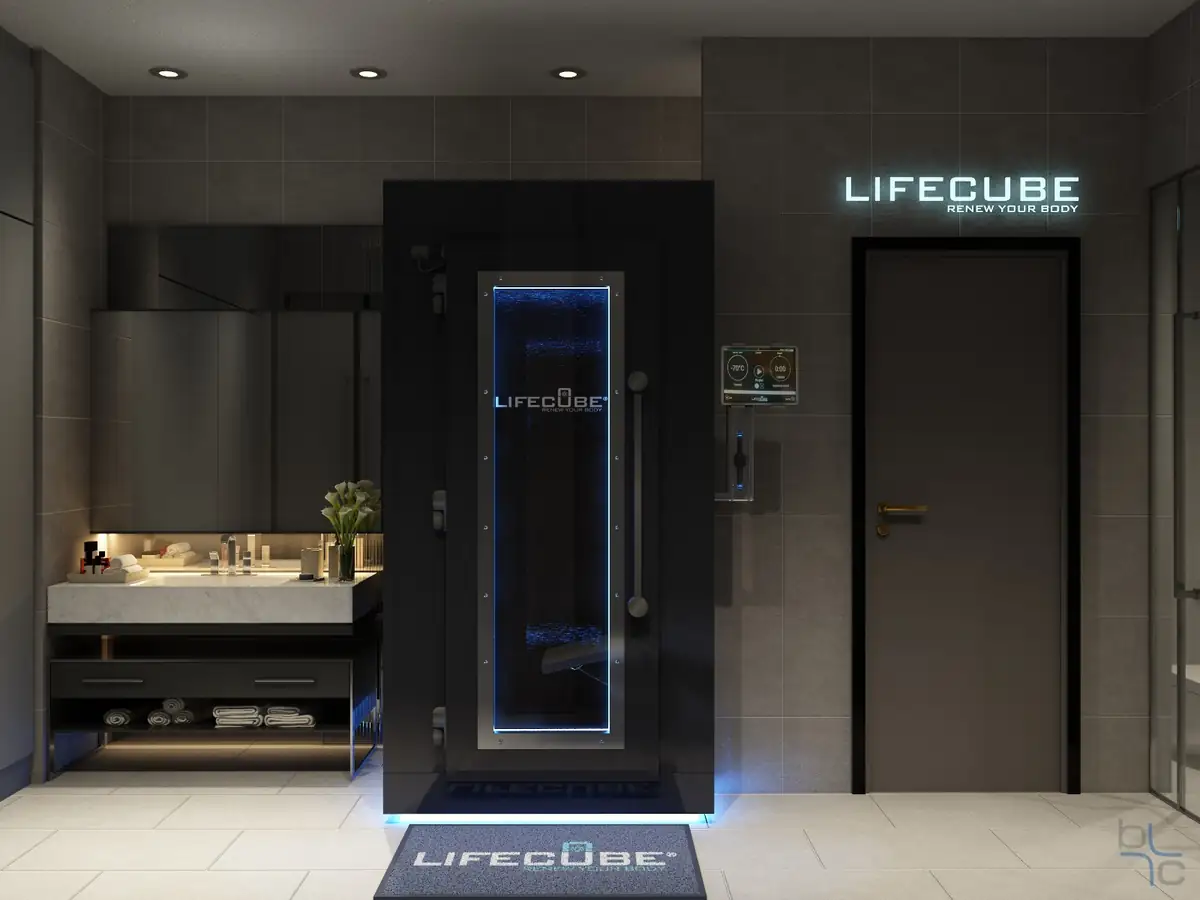
A quotation for LC 1, LC 1+ or LC 2
LC 1 is our compact single-chamber model. LC 1+ and LC 2 have a pre-chamber and main chamber to support an organised session flow. We plan the model and equipment with you to suit your premises and business. We do not publish a list price; your quotation is prepared for your project.
What we itemise in your quotation
The project includes the selected cabin and refrigeration equipment, equipment options and design, transport, assembly and commissioning. Operator training, warranty and requested services are also described in the quotation. We discuss colours and additional options directly with you, so the specification and agreed supply scope are clear.
What LifeCube provides and what is prepared on site
LifeCube organises transport, assembly, commissioning and operator training. Your qualified contractors prepare electricity, water and room conditioning. We coordinate the work using your floor plan, installation address, floor level and access route. Send us your floor plan: we will prepare 2D and 3D drawings and an installation plan for your site, and then submit a tailored quotation on that basis.
How electricity costs are calculated
kW describes electrical power; kWh describes energy consumed. Electricity cost is the energy used in kWh multiplied by your tariff per kWh. Consumption varies during initial cooling, temperature maintenance, sessions and daily drying. Air and water temperatures, humidity and door openings also affect it. We explain your configuration’s requirements in the quotation; a daily cost ceiling needs a suitable consumption profile and cannot be inferred from a single kW figure.
Electric operation without liquid nitrogen deliveries
LifeCube uses an electric refrigeration system. Operation does not require liquid nitrogen deliveries or a nitrogen tank. Temperature and operating status are shown on the control screen. The Cold Booster draws in the cold cabin air and directs it onto the body through 11 individually controllable fans, making the perceived cold noticeably more intense. The fans can be switched by zone – for example only legs, back, lower back or arms – or all together. The automatic heating and drying programme forms part of the daily operating plan on days of use.
Leasing, maintenance and long-term service
You can request leasing information for your project; availability and conditions are explained individually. LifeCube offers annual maintenance and remote support. The chamber can operate without internet, while remote support requires an internet connection with DHCP. Current products are offered with a 2-year warranty and a commitment to spare-parts supply for 10 years. Parts availability does not mean all parts are free. The quotation defines the warranty and service scope.
From enquiry to installation
Your name, company, country, city, installation address and floor level help us understand your project. You can include an existing floor plan, but a finished plan is not required for an initial conversation. Our standard delivery plan is within 4 weeks of ordering. Installation at a prepared site generally takes 1–3 days. The specific schedule is agreed for your project.
What determines the price of a cryotherapy chamber
Buying a cryotherapy chamber from LifeCube means investing in a business model that can generate revenue on every opening day. Which investment suits your site depends mainly on these factors:
- Design: compact single-chamber system (LC 1) or a system with antechamber and main chamber (LC 1+, LC 2) for significantly more treatments per day.
- Temperature and cooling technology: the antechamber runs at around −30 °C, the main chamber at −80 °C or −110 °C depending on the model. With the Cold Booster, the perceived temperature drops to as low as −150 °C.
- Capacity: LC 1+ and LC 2 handle around 75 sessions on average in 24 hours, depending among other things on the humidity at your site.
- Equipment and design: colours, lighting, branding and control interface – your cabin becomes an eye-catcher for your brand.
- Site: floor level, access routes, transport and positioning – we plan everything with you.
- Service: maintenance, remote support, operator training and a 2-year warranty.
- Financing: purchase or leasing – you decide how to invest.
The big advantage over a nitrogen cryosauna: the electric LifeCube has no ongoing costs for liquid nitrogen or tank rental. You only pay for electricity, maintenance and staff – predictable costs that protect your margin. See the full comparison: electric vs nitrogen cryotherapy.
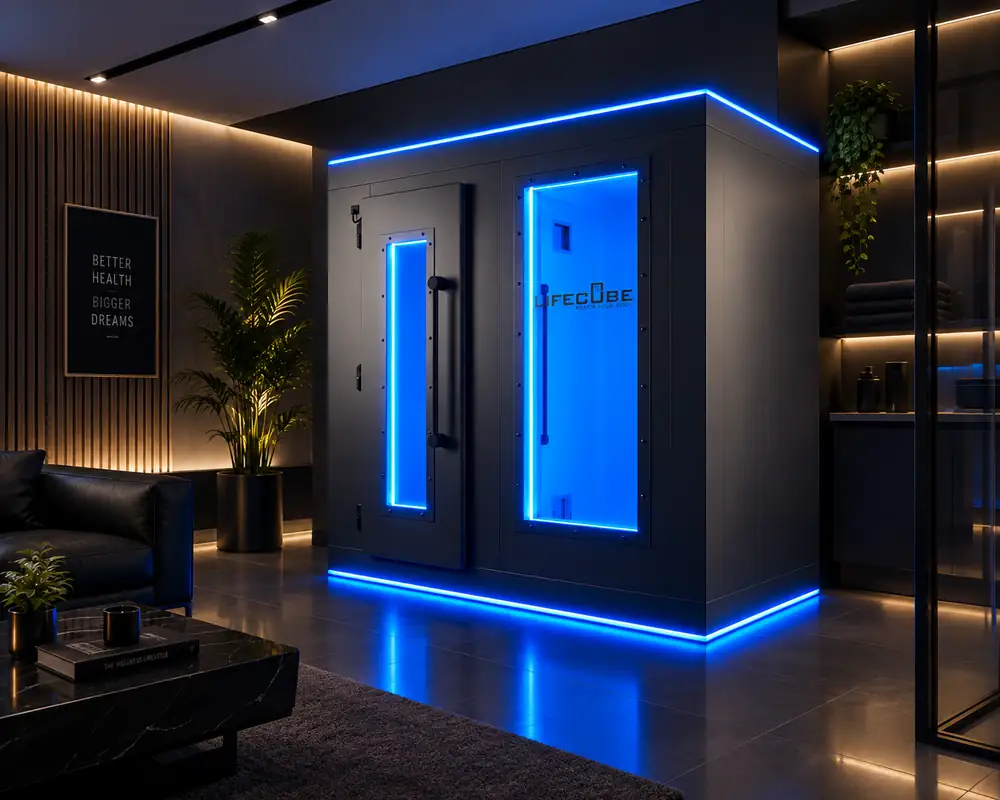
Electric instead of nitrogen: why the LifeCube pays off
| LifeCube (electric) | Nitrogen cryosauna | |
|---|---|---|
| Cold generation | Electric aggregate operated with cooled ambient air | Liquid nitrogen |
| Safety | No nitrogen – no risk of escaping gas | Leaked nitrogen can be inhaled unnoticed; risk of suffocation and frostbite |
| Readiness | Started once a day – runs all day | Must be started up for every treatment |
| Running costs | Electricity, maintenance, staff | Plus nitrogen deliveries and tank rental |
| Space | Aggregate | Storage and exchange of nitrogen gas tanks |
| Application | Whole body including the head | Head stays outside the cabin |
| Users | Several people at the same time possible | Only one person at a time |
| Insurance | No special nitrogen insurance – no hidden costs | Higher liability insurance costs when working with nitrogen |
Worked example: when does your investment pay off?
Your cryotherapy chamber is an investment that works for you. Utilisation is what counts: monthly surplus = sessions per day × price per session × opening days − running costs. Payback time = investment ÷ monthly surplus.
LC 1+ and LC 2 handle around 75 sessions on average in 24 hours. Even part of this capacity can turn your chamber into a strong additional source of revenue. Enter your own figures in the ROI calculator – we are happy to calculate the payback period for your project in a personal quotation.
Not a revenue or profit promise. Your calculation depends on location, pricing and demand.
Buying a cryotherapy chamber: what to check
When you buy a cryotherapy chamber from LifeCube, you buy directly from the manufacturer in Germany (Schweinfurt) – without intermediaries. These points help when comparing offers:
- Cooling: electric or liquid nitrogen? The electric LifeCube needs neither nitrogen deliveries nor a tank.
- Whole body or head outside: a walk-in cryotherapy chamber cools the whole body including the head; in many cryosaunas the head stays outside.
- Temperature and antechamber: which target temperature is reached – and is there an antechamber? Chambers with an antechamber allow significantly more treatments per day.
- Capacity: how many sessions per day are realistic? LC 1+ and LC 2 handle around 75 sessions on average in 24 hours.
- Service: maintenance, remote support, training, a 2-year warranty and spare parts supply committed for 10 years.
- Origin and references: LifeCube develops and manufactures in Germany (Schweinfurt). Our chambers operate on five continents – at professional football clubs, hotels and on cruise ships. See clients.
How a session in the LifeCube works
- Preparation: the customer must be completely dry – skin, hair and clothing.
- Clothing: swimwear, shorts or underwear, plus gloves, dry socks and shoes, a headband or ear protection and a face mask.
- Antechamber (LC 1+ and LC 2): 1 minute at around −30 °C.
- Main chamber: up to 3 minutes at −80 °C or −110 °C, depending on model and programme.
- Supervision: trained staff accompany the session with visual and voice contact.
- Afterwards: light movement.
A session takes only a few minutes. That allows many sessions per day – and keeps your cabin working efficiently for your revenue.
Cryotherapy chamber, cryochamber, cryosauna: what is the difference?
Cryotherapy chamber, cryochamber and whole-body cryotherapy chamber usually mean the same thing: a walk-in cabin in which the whole body, including the head, spends a short time in very cold, dry air. The LifeCube belongs to this category and is cooled electrically. Whole-body cryotherapy (WBC) is the term mostly used in clinical settings.
A cryosauna is usually a single-person cabin in which the head stays outside, and many cryosaunas are cooled with liquid nitrogen. Cryolipolysis is a different method: a separate device cools specific areas of the body. The LifeCube is not a cryolipolysis device. For background on cold exposure, see studies and research.
A cryotherapy chamber for home use?
The LifeCube is designed for commercial operation in gyms, hotels, sports clubs and wellness centres. A private installation is also possible. Send us your floor plan: we will prepare 2D and 3D drawings and an installation plan, and then submit a quotation on that basis. Pages for commercial operators: cryotherapy chamber for gyms and cryotherapy chamber for hotels and spas. More about us as a cryotherapy chamber manufacturer in Germany (Schweinfurt).
Frequently asked questions
What does a LifeCube chamber cost?
We provide an individual quotation for the model, equipment and project scope. We do not publish a list price. Our team helps plan the right LifeCube system with you.
Is leasing available?
Leasing is available on request. Availability and conditions are discussed for your project and explained in the quotation.
How are electricity costs calculated?
Energy consumed in kWh multiplied by the tariff per kWh gives electricity cost. Consumption depends on the operating programme, environment and configuration. Power in kW alone is not daily energy use.
Who provides installation and training?
LifeCube organises assembly, commissioning and operator training. Your qualified contractors prepare electricity, water and room conditioning according to the agreed installation plan.
Do I need a finished floor plan before contacting you?
No. An existing floor plan is helpful, but a description of your site and project is enough for an initial conversation.